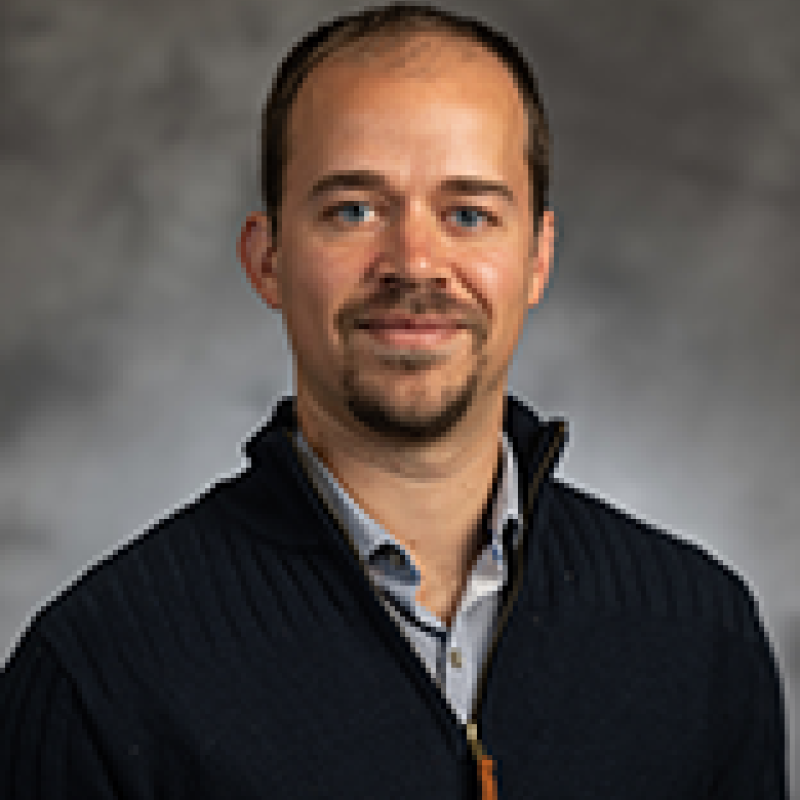
"Jeffrey Kidd named one of Forbes ‘30 Under 30’ in Science
For the first time, Forbes Magazine named 12 up-and-comers in 12 specialties – people who, as they put it, are not waiting to change the world – and Assistant Professor Jeffrey Kidd made the cut in Science.
Kidd, who uses DNA sequencing to understand what forces shape evolution in human beings and animals, joined the Department of Human Genetics in January. He is one of five NIH Director’s Early Independence Award recipients who are on the Forbes list of innovators.
Located in Human Genetics, Kidd’s lab is also affiliated with the Department of Computational Medicine and Bioinformatics, and the Genome Science
Training Program. “We take a genomics approach that involves high-throughput sequencing and genotyping with population-genetic modeling,” says Kidd. “We’re interested in using technologies to understand the biology of genomic evolution and how that relates to genetic variation and disease.”
Forbes culled its list of 360 innovators from thousands of nominations from peers and industry."
At the American Association for Cancer Research (AACR) Annual Meeting, Bioinformatics candidates Alejandro Balbin and Michelle Wynn will each be recognized for their contributions.Their abstracts scored in the top 2.5% of abstracts presented in the poster sessions and have been selected for special recognition. Mr. Balbin is exhibiting Reconstructing targetable pathways in lung cancer by integrating transcriptome, proteome and phosphoproteome. Ms. Wynn’s presentation is The natural enzyme sequestration in signaling cascades provides inherent opportunities for off-target effects induced by kinase inhibitors.
The Bioinformatics Program is proud to acknowledge this student achievement.

"The Institute of Medicine today provided a broad set of guidelines for the development of 'omics-based tests, a little more than one year after alleged scientific fraud by a former Duke University researcher was uncovered and shed light on the need for greater oversight."
"The report lays out recommendations for three overarching areas in the development process: discovery, test validation, and evaluation for clinical utility and use."
- Read Genome Web Article | Read Science Magazine Article | Read Omics Report

Announcing the new video tutorial for the CCMB/NCIBI developed MetScape plugin for Cytoscape.
The MetScape Plugin for Cytoscape provides a bioinformatics framework for the visualization and interpretation of metabolomic and expression profiling data in the context of human metabolism. It allows users to build and analyze networks of genes and compounds, identify enriched pathways from expression profiling data, and visualize changes in metabolite data.

The Center for Computational Medicine and Bioinformatics announces the Pilot Research Grant Competition for 2012. The goals of the Pilot Grant program are to bring together faculty from different fields, quantitative and bio/medical, in joint projects which will foster successful future proposals and to enhance CCMB and DCM&B.
Letter of Intent:
Please send a brief paragraph describing the topic of the proposal that you intend to submit and the names of the PIs to Alla Karnovsky (akarnovs@med.umich.edu) by May 25, 2012. At least one investigator must be a CCMB member (see http://www.ccmb.med.umich.edu/faculty).
Proposal Criteria:
In preparing your proposal, please address the following criteria, which will be used by the reviewers to score the proposals:
Proposal Structure:
Application forms will be available shortly in the website; submission will be electronic only. The body of the proposal will be organized as follows:
Please send inquiries to Alla Karnovsky, CCMB Pilot Project coordinator at akarnovs@umich.edu or Gil Omenn at gomenn@umich.edu.

We invite you to participate in The Great Lakes Bioinformatics Conference (GLBIO), taking place at the U-M Michigan League Conference Center in Ann Arbor, MI; May 15-17. If you haven’t participated before, this is an excellent chance to attend and present your work. This is a regional conference of the International Society for Computational Biology, and is a rewarding meeting in terms of scientific stimulation and networking with others in your field. There will be Tutorials, Special Topic session, Oral Presentations and Posters, along with four Keynote Presentations
This year's keynote presentations will cover a broad range of interesting topics. Keynote Speakers for 2012 are: Howard Cash of Gene Codes, Michael Lynch of Indiana University, Mercedes Pascual of the University of Michigan, and Russell Schwartz of Carnegie Mellon University.
The following are focus areas for the conference: Bioimaging, Databases and Ontologies, Disease Models and Epidemiology, Evolution and Comparative Genomics, Gene Regulation and Transcriptomics, Mass Spectrometry and Proteomics, Population Genomics, Protein Interactions and Molecular Networks, Protein Structure and Function, Sequence Analysis, Text Mining, Algorithm Development and Machine Learning, Metagenomics.
Who Should Attend:
• Informatics and life sciences researchers
• Computer scientists and software developers
• Graduate and undergraduate students and faculty
• State and federal government organizations
• Medical and commercial bioscience organizations
• Anyone interested in bioscience applications
Honorary Conference Chairs:
• Brian Athey, University of Michigan
• Robert Murphy, Carnegie Mellon University
Conference Chairs:
• Jim Cavalcoli, University of Michigan
• Lonnie Welch, Ohio University
Program Chairs:
• Laura Brown, Michigan Technological University
• Margit Burmeister, University of Michigan
• Elodie Ghedin, University of Pittsburgh

Dr. Gilbert Omenn wrote an op-ed article in The Detroit News supporting continued federal funding for medical research.

Bioinformatics graduate student, Michelle Wynn, was interviewed in the Society for Mathematical Biology Newsletter, Volume 24, No. 3, September 2011.

Brian D. Athey, Ph.D.,was appointed chair of the University of Michigan's Department of Computational Medicine and Bioinformatics, following action by the University of Michigan Board of Regents today.
Athey is a nationally renowned leader in computational medicine and bioinformatics and is the first chair of the new U-M department.

Bioinformatics student Conner Sandefur was featured in the student spotlight in the Biophysical Society Newsletter